 East Lothian Fitted Wardrobes
Sliding Door Wardrobes for East Lothian Bedrooms
Why Sliding Doors Work Particularly Well Here
East Lothian bedrooms range from compact fisherman's cottages in Dunbar to generously proportioned Victorian semis in North Berwick and new-build rooms in Prestonpans where ceiling heights hover around 2.4 m. Sliding door wardrobes suit this variety well because they never swing into the room, leaving floor space free regardless of furniture layout. A standard hinged door needs roughly 600 mm of clear arc to open fully. A sliding door needs none of that.
The coastal climate also plays a role. Salt air and humidity fluctuations can cause solid timber doors to swell and stick. Sliding systems mounted on aluminium top tracks or floor runners handle minor seasonal movement better than a hinged door set into a tight frame.
How Do I Choose Sliding Door Wardrobes for My East Lothian Bedroom?
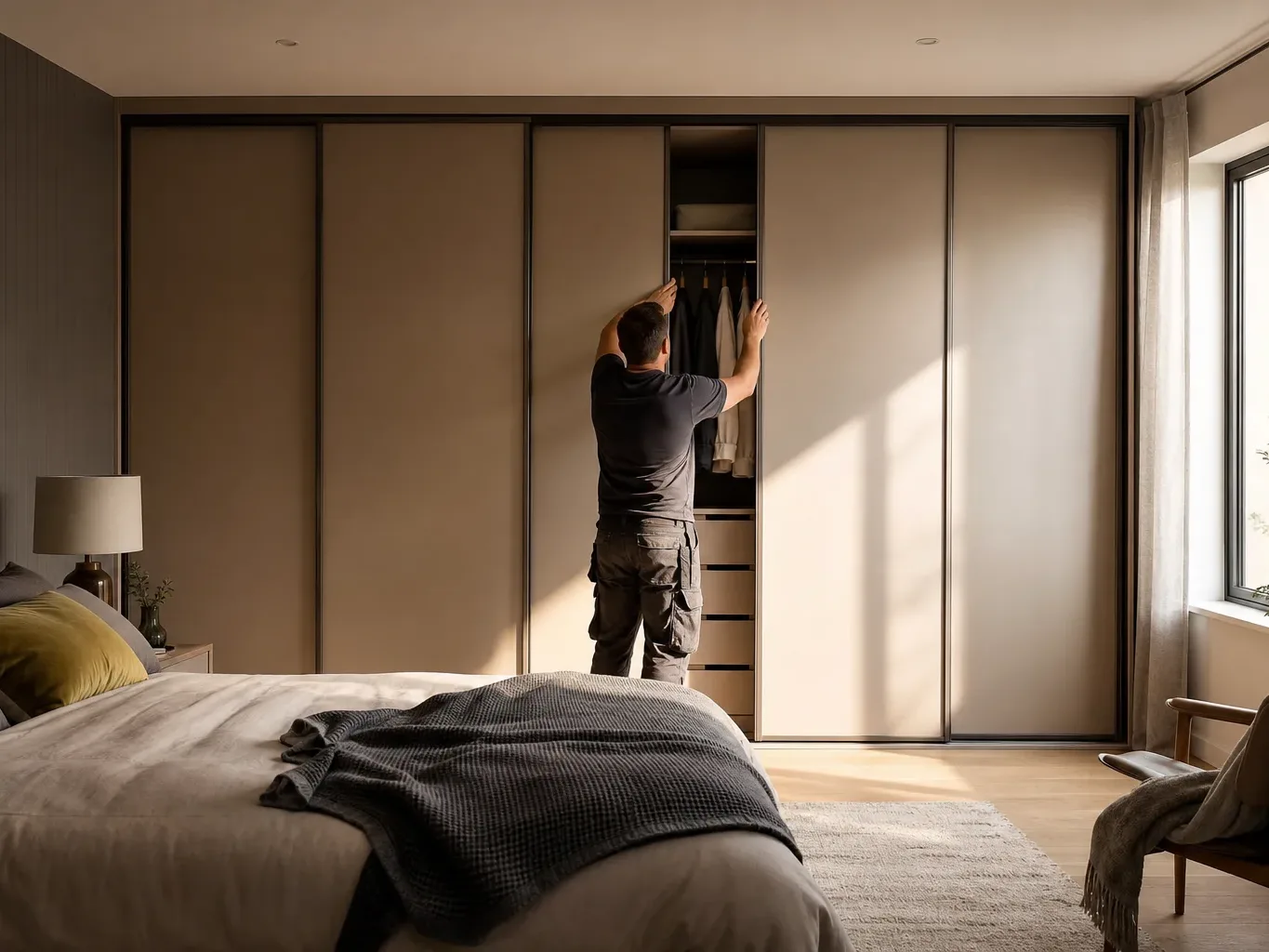
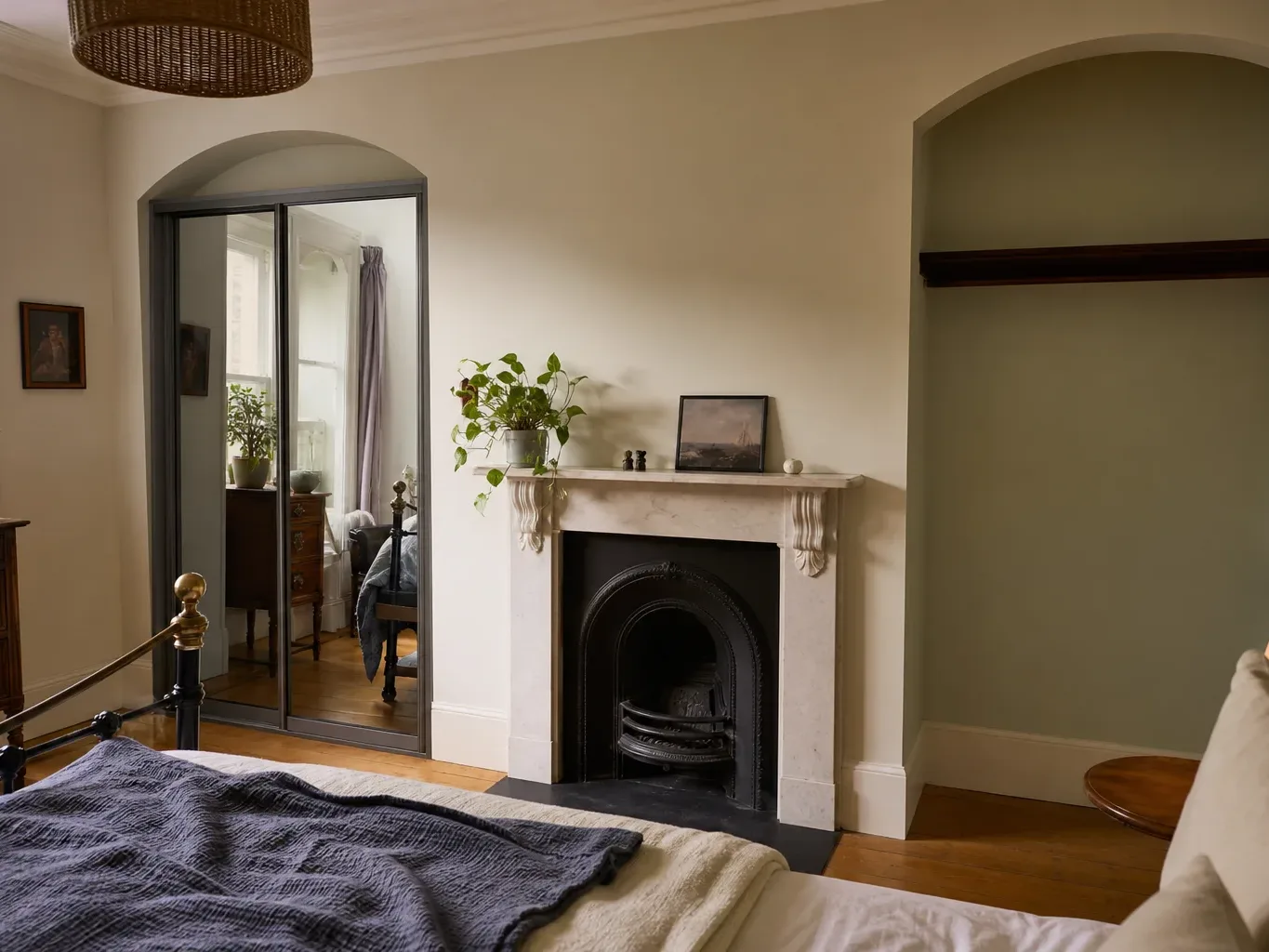
Match the door width and frame material to your room's dimensions and your storage priorities before choosing any aesthetic finish. A two-door sliding wardrobe covering a full chimney-breast alcove of around 1,800 mm typically uses doors 900 mm wide each. Three-door configurations suit wider runs of 2,400 mm or more, and they let you access a larger section of the interior at once because the doors overlap less proportionally.
Frame material matters for longevity. Aluminium frames resist moisture and do not warp, making them a sensible choice for older East Lothian properties that can run cold in winter. MDF-framed doors are cheaper but benefit from rooms that are well-heated and ventilated. Consider the interior fittings at the same time as the doors: a wardrobe with a solid hanging rail and a shelf or two costs considerably less than one fitted with pull-out shoe racks, internal drawers, and a trouser press, but the latter genuinely does reduce clutter across the rest of the room.
Frame Finishes and Panel Options
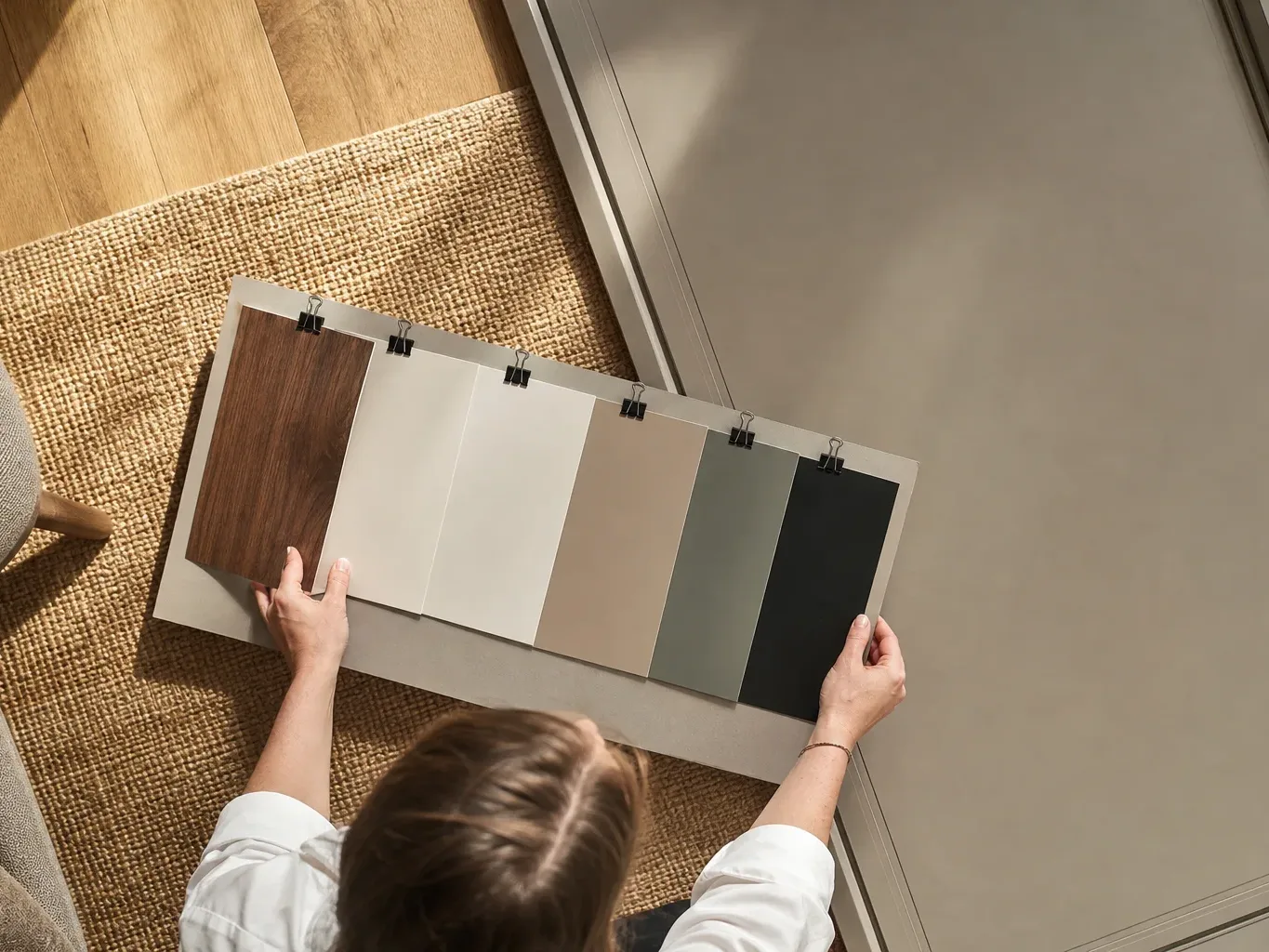
Mirrored panels are the most popular choice in smaller bedrooms because they reflect light and make the room read as larger. Frosted or fluted glass sits between a fully mirrored door and a solid panel: it hides clutter without the full mirror effect. High-gloss lacquered panels in white, anthracite, or warm oak grain work well in contemporary interiors and are straightforward to wipe clean. Fabric-insert panels add softness but are harder to maintain over time.
Tracks and Running Gear
Top-hung systems, where the door weight is carried by an overhead track, give a cleaner floor line and are easier to keep dust-free. Floor-guided systems use a small bottom channel that can trap debris but are generally more stable for heavy doors over 25 kg. If you have underfloor heating, check that any floor track is compatible with the system before ordering.
Are Sliding Door Wardrobes Suitable for Small Bedrooms in East Lothian?
Yes, sliding wardrobes are arguably better suited to small bedrooms than any other door type, because they reclaim the swing space a hinged door would otherwise require. A single hinged door on a 600 mm deep wardrobe needs about 0.36 square metres of floor arc. Over a full-width fitted unit, that saving compounds significantly.
In a room of roughly 3 m by 3.5 m, common in bungalows across the Haddington area, fitting sliding wardrobes across one full wall leaves the central floor completely clear. Mirrored door panels compound the benefit by bouncing light around the room. The visual result is a space that reads noticeably wider than the measurements suggest.
What Size Do Sliding Wardrobe Doors Come In?
Standard sliding wardrobe doors are typically 2,000–2,400 mm tall and 600–1,200 mm wide per panel, though bespoke manufacturing can reach ceiling heights of 3,000 mm or more. Most UK suppliers offer a made-to-measure service with lead times of two to six weeks, which allows you to fill an entire wall without awkward filler panels at the sides or top.
For East Lothian properties with 2.4 m ceilings, a floor-to-ceiling door at 2,350–2,400 mm is usually achievable off a standard range. Period properties in Musselburgh or Haddington with coved ceilings occasionally need a stepped cornice cut-out or a small pelmet board to allow the top track to sit level. Any competent local fitter can deal with this, but factor in an extra 60–90 minutes of fitting time.
Weight and Track Ratings
Door weight increases significantly once you move beyond 10 mm glass or choose a solid-core panel. Mirrored glass at 6 mm adds around 15 kg per square metre. Check that your chosen track is rated to handle the door weight with a comfortable margin; a track rated to 80 kg per door running a 60 kg door will perform reliably for many years. Underpowered running gear is the most common cause of doors that derail or run sluggishly within two or three years of fitting.
What Are the Downsides of Sliding Closet Doors?
The main practical limitation is that you can only access roughly half the wardrobe interior at any one time, because one door always overlaps the other. On a 1,800 mm wide wardrobe you have clear access to about 900 mm of width at once. If your storage is well-organised this is rarely a problem, but it rewards a little planning when you are deciding where to hang different clothing categories.
The track itself requires periodic cleaning. Dust, hair, and small fibres accumulate in the bottom guide channel and in the top track, and a build-up eventually causes drag. A quick clean with a dry brush every few months prevents this becoming a significant issue. Running gear can also wear over years of heavy use, though quality rollers rated for the door weight are straightforward to replace without replacing the entire system.
Some older East Lothian homes have slightly uneven floors, and a floor-guided system may need shimming to run level. A top-hung system sidesteps this issue almost entirely, since the door hangs from above and the floor guide only controls lateral movement.
Budgeting for a Fitted Sliding Wardrobe
A basic sliding wardrobe covering a 1,800 mm alcove with two mirrored doors and a hanging rail typically runs £800–£1,500 installed. A full-width fitted system across a 3,600 mm bedroom wall with internal drawer units, shelving, and high-gloss panels sits closer to £2,500–£4,500 depending on the supplier and specification. These figures reflect current market rates from local East Lothian joiners and regional fitted-furniture companies serving the area.
Bespoke, floor-to-ceiling wardrobes using premium materials from national fitted-furniture brands can exceed £6,000 for a large bedroom, but mid-market suppliers producing made-to-measure doors give most homeowners a comparable result at a meaningfully lower price. Getting two or three quotes from local joiners and comparing them against one national retailer quote is the most reliable way to calibrate what you are actually paying for.
Frequently Asked Questions
How Do I Choose Sliding Door Wardrobes for My East Lothian Bedroom?
Start with the room's dimensions and decide how many doors you need to cover the space without awkward gaps. Match the frame material to your climate conditions: aluminium frames handle moisture and cold better than MDF in older East Lothian properties. Choose the interior fittings at the same time as the doors so the unit genuinely solves your storage problem rather than just looking tidy from the outside.
Are Sliding Door Wardrobes Suitable for Small Bedrooms in East Lothian?
Yes, they are well suited to small bedrooms because they eliminate the floor arc a hinged door requires, which can be as much as 0.36 square metres per door. Mirrored panel options also reflect light and make a compact room read as larger. In a typical 3 m by 3.5 m bedroom, fitting sliding wardrobes across one full wall leaves the central floor entirely clear.
What Size Do Sliding Wardrobe Doors Come In?
Standard sliding wardrobe doors are typically 2,000–2,400 mm tall and 600–1,200 mm wide per panel. Most suppliers offer made-to-measure sizes with lead times of two to six weeks, allowing floor-to-ceiling coverage without filler panels. Period properties with coved ceilings may need a small pelmet board or cornice cut-out to keep the top track level, which adds around 60–90 minutes to fitting time.
What Are the Downsides of Sliding Closet Doors?
You can only access roughly half the wardrobe interior at once because one door always overlaps the other, so organisation matters more than with a hinged door. Tracks collect dust and need a dry brush clean every few months to prevent drag. Running gear can wear over time, though quality rollers are straightforward to replace without changing the whole system.
How Much Do Fitted Sliding Wardrobes Cost in East Lothian?
A basic two-mirrored-door unit covering an 1,800 mm alcove typically costs £800–£1,500 installed. A full-width fitted system across a 3,600 mm wall with internal drawers and shelving runs £2,500–£4,500 depending on specification. Getting two or three quotes from local joiners alongside one national retailer quote is the most reliable way to understand what different price points actually include.